
WalkingPad X218 Treadmill Review
Share This!
Walking Pad X218 Treadmill Review: Can You Actually Jog on It?
$1,799
Made in China
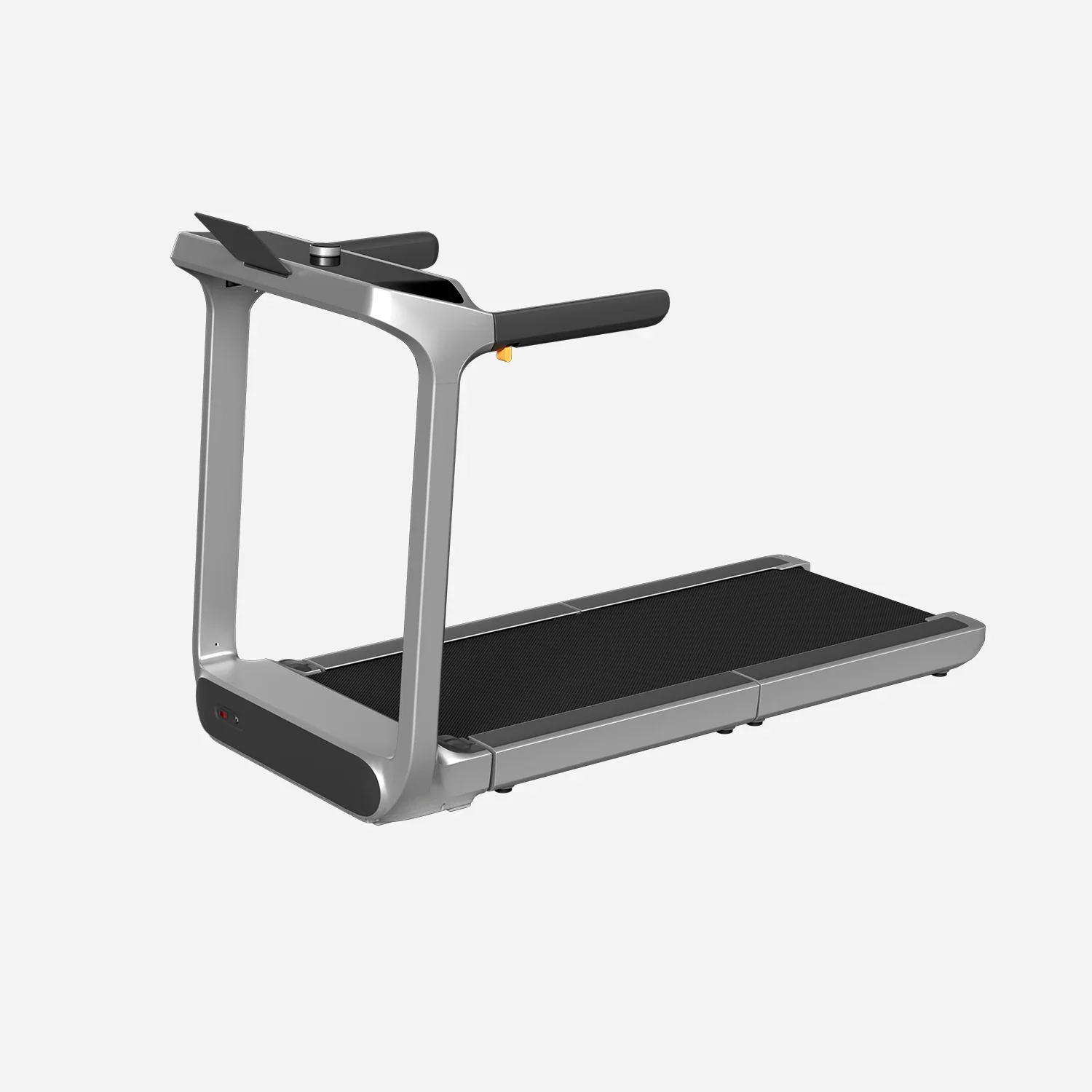
Today we’re finally covering something a lot of you have been asking about: a walking pad. Specifically, the Walking Pad X218, literally made by the brand called Walking Pad. These things have exploded in popularity lately: low profile, easy to store, marketed as a simple way to sneak in steps at home or the office. We wanted to see if one could actually hold up to more than a slow stroll.
Spoiler: this one surprised us.
Out of the Box: About as Simple as It Gets
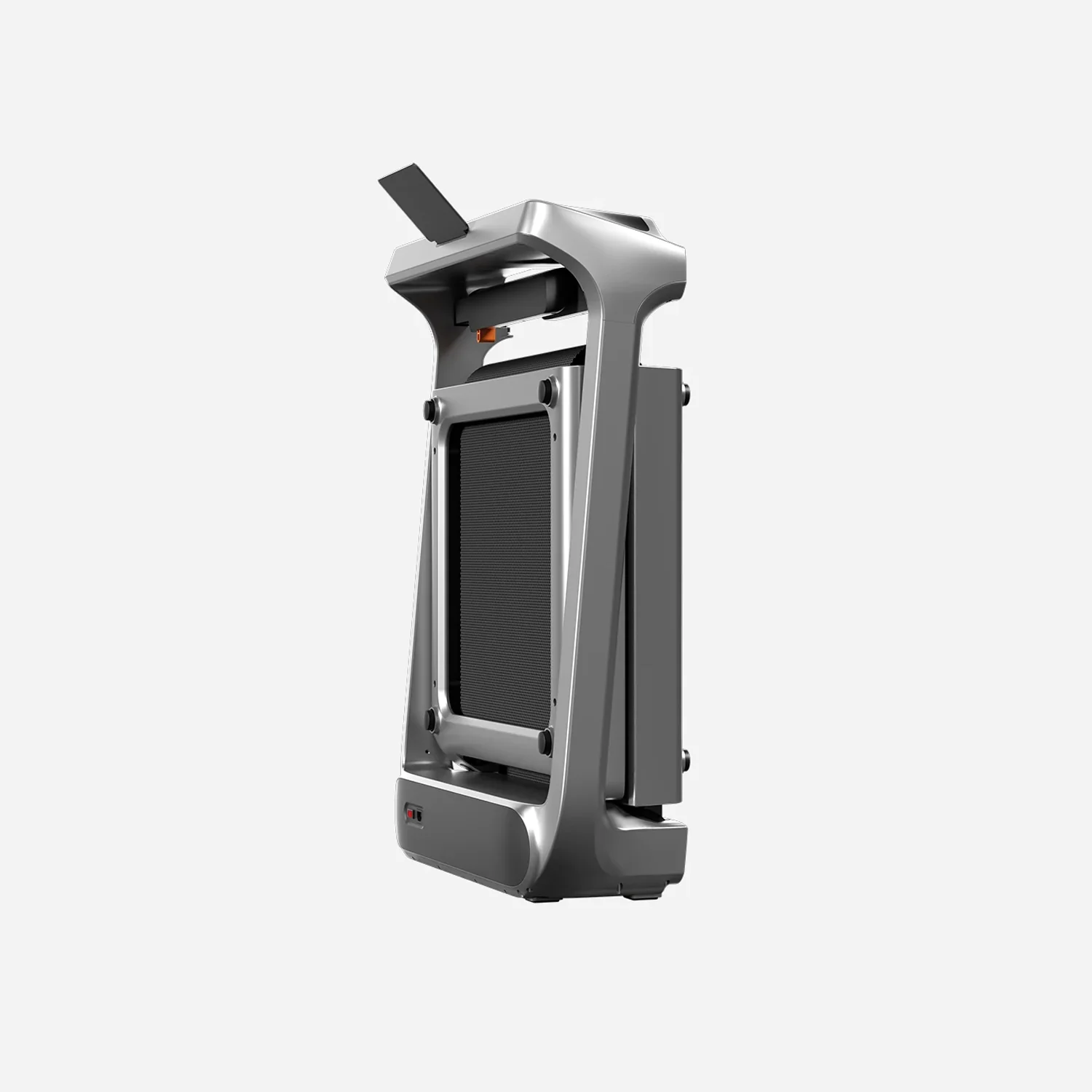
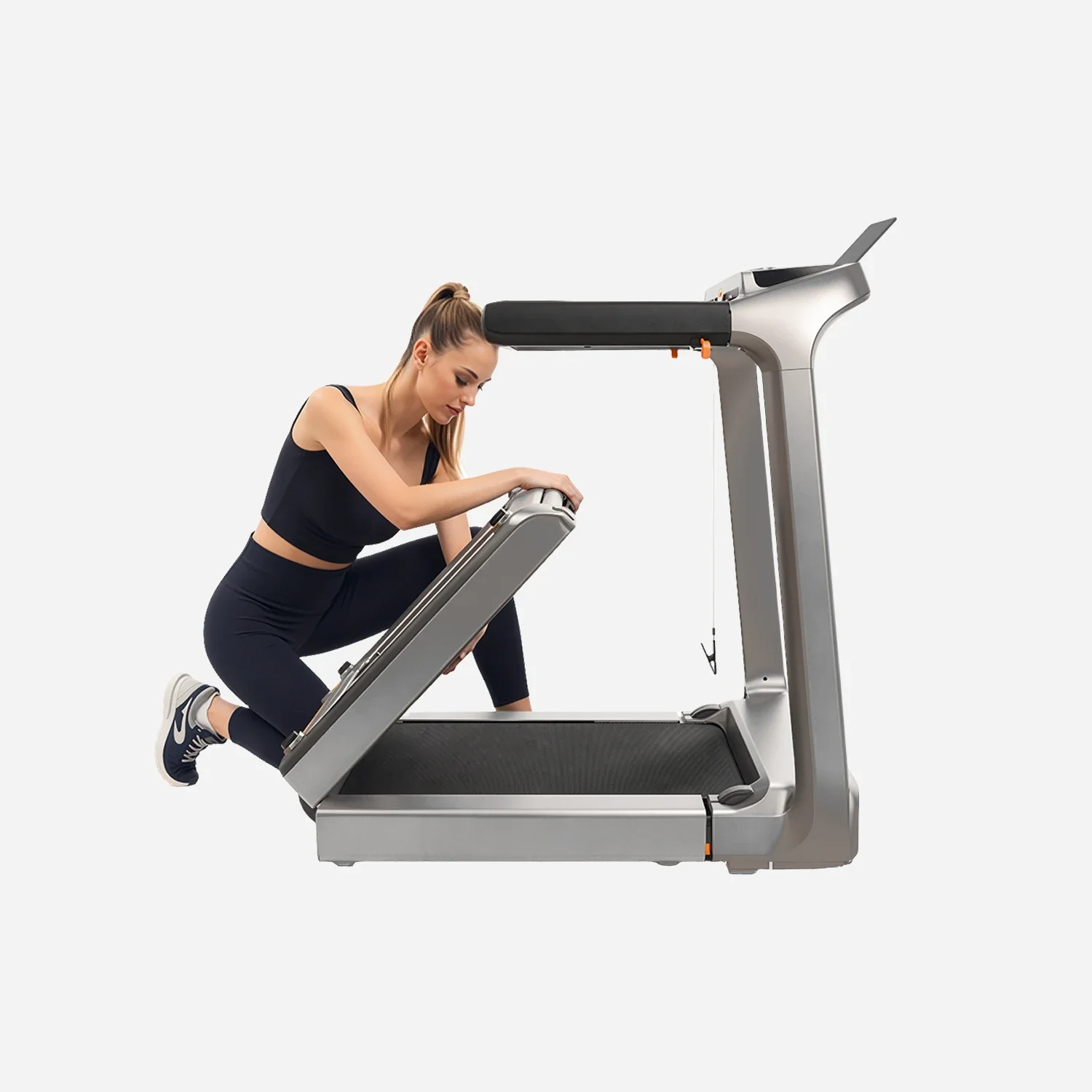
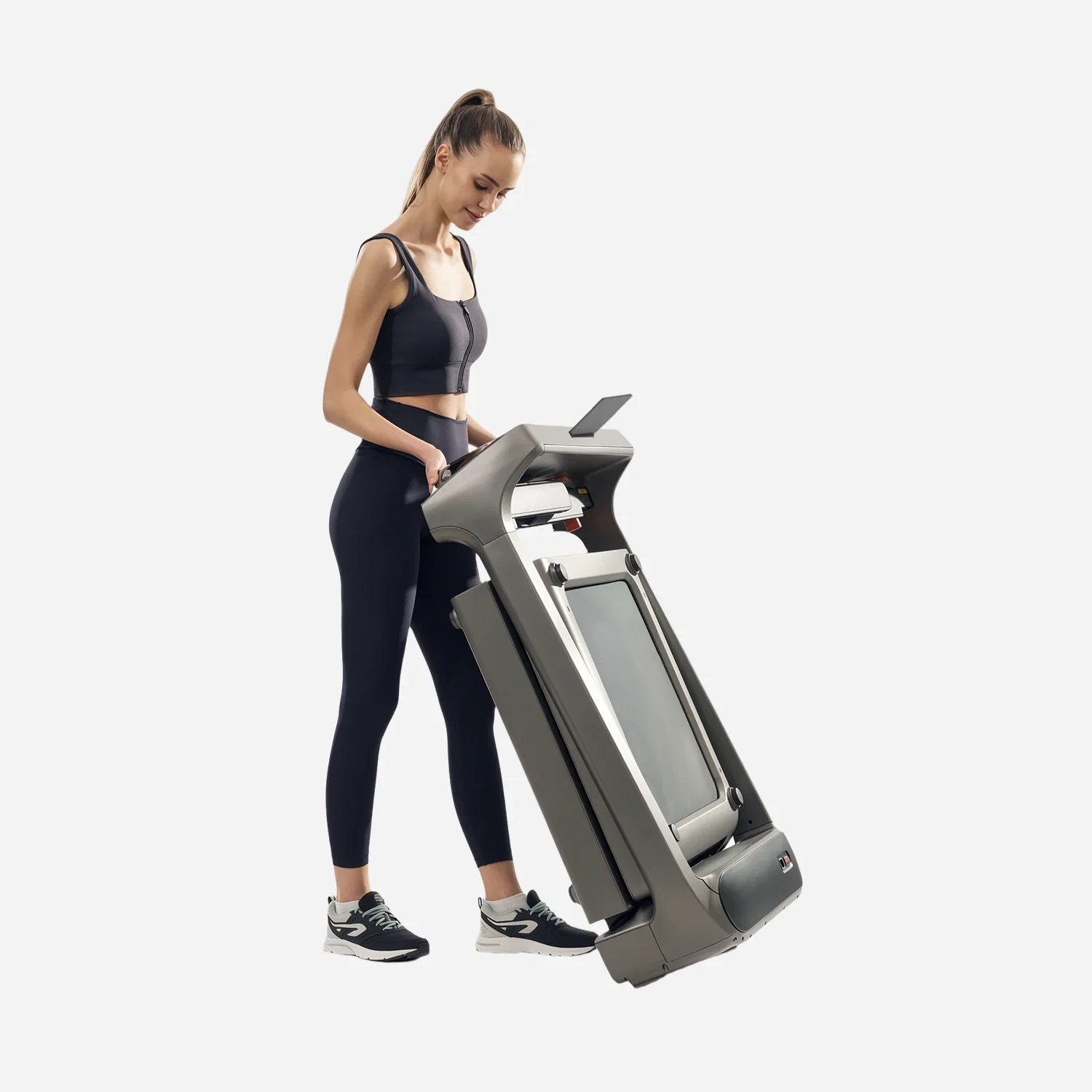
If you’re looking for simplicity, the X218 delivers. It arrives basically pre-assembled. You unbox it, plug it in, and unfold it, no tools, no separate assembly session. This was actually the first time we unfolded one on camera ourselves, though we’d watched our crew set the angle correctly beforehand. The fold-out sides tuck in with small pull tabs, and it does fold down neatly once you know the motion. It’s a little heavier than you’d expect for its size, which we’d chalk up to its 300 lb. weight rating.
Specs at a Glance
- Max user weight: 300 lbs.
- Belt: 20″ wide x 55.1″ long
- Motor: 1.75 HP
- Speed range: 1.0 to 11.5 MPH
- No incline
- Warranty: 2 years parts, 1 year labor
- Price: around $1,800
No Incline, and That’s the Point
If you’re expecting incline, you’ll be disappointed, but that’s simply not what a walking pad is designed to do. Speed adjustments live on one side of the console, and there’s nothing on the other side for elevation, because there’s no lift motor in the unit at all. We confirmed that ourselves when the unit was folded flat; there’s nothing back there that could raise or lower a deck.
Console and App
The console is a small, low profile LED display that cycles through your stats: speed, distance, and calories. It will show “app disconnected” if you haven’t paired it, but the app is optional, not required to use the machine. You can adjust speed in whole numbers using quick buttons, or fine-tune it a tenth of a mile per hour at a time using a rotating dial on the frame.
Can You Actually Jog on This Thing?
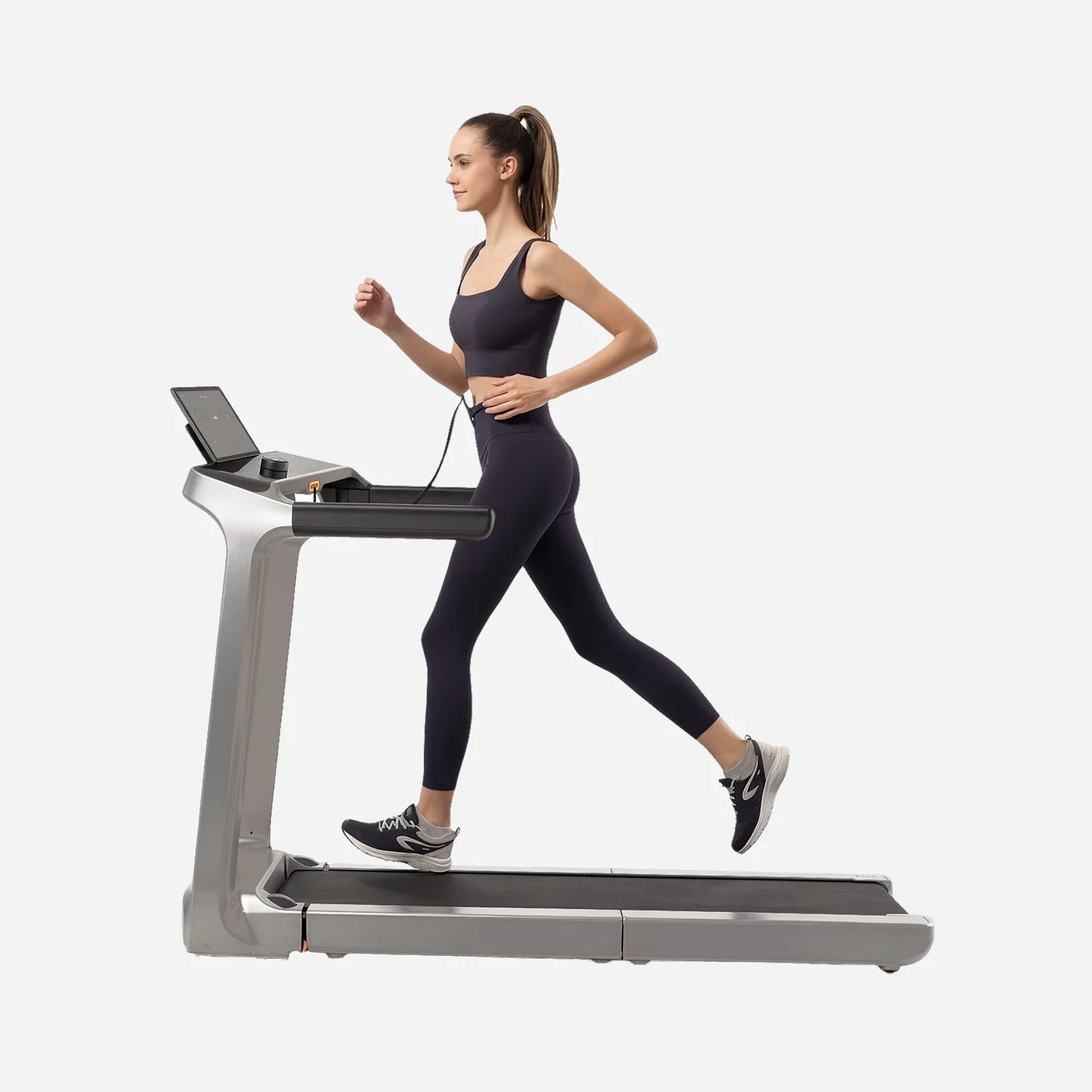
This is where the X218 earned some real credit. Despite the “walking pad” branding, the display shows a top speed up to 9 MPH, and in our testing, it actually got there. We ran it up to a jog at 5 MPH and then pushed to 6.5 MPH at 270 lbs., stomping down deliberately to try to make the belt skip. It didn’t skip once. The uprights felt sturdy even under load, and there’s a push-down safety stop built into the handle that pauses the belt immediately if you need it to.
One number worth knowing: our acceleration test from 2 to 8 MPH came in at 32 seconds, one of the slower ramp-up times we’ve measured across our tests. Once you’re at your target speed it holds steady, but if you’re planning interval work with quick speed changes, that lag is worth factoring in.
Sound Level
Subjectively, this felt like one of the quieter treadmills we’ve tested while we were on it. Officially, though, our decibel meter read 71.3 dB, the highest reading in this test batch. Take that as you will; it never felt disruptively loud in person, but the numbers say it’s not whisper quiet either.
Safety Key
There’s a pull-out safety key with two small clips holding it in place. If you’ve got kids in the house, this is one you’ll want to keep out of reach between uses.
Folding It Back Down
Folding it back up is actually easier than unfolding it for the first time, once you’ve seen it done. Grab the orange center handle, lift, and the two belt surfaces (held together with a thin adhesive strip) come together smoothly. From there, you can lean it onto its built-in wheels and roll it into a closet or out of the way when company’s over.
Warranty
Two years on parts, one year on labor, which is pretty standard for this price range. The real question with any treadmill like this isn’t the warranty terms on paper, it’s how easy it actually is to get a technician out and get parts if something breaks down the road. That’s true of most equipment in this category, not just this one.
Pros
- Ships essentially pre-assembled, no real setup process
- Surprisingly capable of jogging, not just walking; hit 6.5 MPH in testing without skipping
- Compact, foldable, and rolls easily on built-in wheels
- 300 lb. weight rating is solid for the category
- App is optional, not required to operate
Cons
- No incline at all, by design
- Slow acceleration from 2 to 8 MPH (32 seconds in our testing)
- Measured 71.3 dB, the loudest in this test batch despite feeling quiet in use
- Heavier to maneuver than its compact size suggests
- Long-term parts and service access is an open question, same as most brands in this space
Bottom Line
The Walking Pad X218 exceeded our expectations. We went in thinking “walking pad” meant a slow-paced novelty, and came away having jogged on it at 270 lbs. without a single skip. It folds away easily, sets up in minutes, and handles more than its name suggests. The tradeoffs are real, no incline, a lower weight cap than a full-size treadmill, and a slower ramp-up to speed, but for anyone wanting something compact that can genuinely do more than a casual stroll, this is a solid pick. Honestly, pretty decent bang for your buck.
But if you’re a genuinely big guy looking for a treadmill specifically because you need something capable of safely and reliably handling a heavier user, this one would not be high on our list.
Horizon Fitness 7.8 AT Treadmill
Made in China
This comparison is going to share a similar theme to the review we did on the Horizon 7.0 AT Treadmill. Good price point, heavy duty frame but lacking on the important stuff. We had another issue with the incline not being able to hold my weight and causing the belt to run wild. You can read about that below: But first, lets talk about the good stuff.
First, the good.
For $1999, this is a very heavy-duty treadmill which weighs an impressive 330lbs. The Horizon 7.8 AT Folding Treadmill has an oversized walking platform at 22” x 60” and a respectable warranty of 5 years parts / one year in home labor. As I walked and jogged on this treadmill, my 6” 4”, 298LB frame didn’t feel like it was too much for this machine (as long as I did not incline it).
I really thought this treadmill felt solid and better than most other sub $2000 machines. As I have written in other treadmill reviews, the fact that Horizon is using FTMS Bluetooth (which allows you to pair your own tablet or mobile device) and not forcing you to lock into a monthly subscription (looking at your Nordic Track) is a big deal to me. You should not have to pay hundreds of dollars per year to use the electronics! I felt like the motor cover was not too high, the handlebars were in the right spot for a bigger person and the electronics were very easy to use and understand. Again, as I tested this machine, everything was going really well until it was time to use the incline and that is where it all fell apart.
Now the bad… and this is a WARNING!
If you weigh over 250lbs (estimate on the weight) and want to use this treadmill at a steeper incline, this is not the treadmill for you. The Horizon 7.8 AT T Treadmill will potentially be dangerous to heavier users who walk with a higher incline. As you will see in the review video, when I took the incline up, the treadmill could not handle my weight, and the speed of the belt ran wild (combination of my body weight and gravity). What is even worse, the treadmill should have kicked on a “SPEED ERROR” warning and shut the treadmill down, but that did not happen. WTF Horizon??? How is this possible? We did not take the time to figure out what exact parameters are needed for the belt to speed up but based on the fact that this happened on both the Horizon 7.0 AT Treadmill and the Horizon 7.8 AT Treadmill, we know it was most likely not a coincidence.
The treadmill simply cannot handle higher weight at a higher incline. Keep in mind that we did not exceed the weight capacity. So, what does this mean? This means that if you are a heavier person, you probably cannot use this treadmill at a higher incline. Kind of seems like a problem to me. I would almost say that if you don’t care about incline then go for it, but this is still a bad idea. What if someone else gets on the treadmill in your house and falls off? Can you say, “umbrella policy”?
The thing that gets me is this would not be hard to fix. This is a problem with the braking mechanism in the motor. Did they not actually test their machines? Why set a higher weight rating if the treadmill cannot handle it? I don’t know the answer to this question.
The other issue is that the walking belt was slipping out of the box. The fix could be as easy as tightening the rear rollers, but we really dislike any type of preventative maintenance out of the box. Not a super big deal but something that should be caught in quality control.
PROS on the Horizon 7.8 AT Treadmill:
Large, oversized walking platform. Very heavy-duty 300 LB frame. Well priced at under $2000. FTMS Bluetooth is always a plus! Good solid feel and performance as long as we do not incline the machine.
Cons on the Horizon 7.8 AT Treadmill:
If you want to use this treadmill at a higher incline, there is an injury risk. The 7.0AT and the 7.8AT Horizon Treadmills both experienced a catastrophic failure where the belt sped up unexpectedly during use. The user weight combined with a steeper elevation caused the belt to run out of control with no warning and no “SPEED ERROR” control.
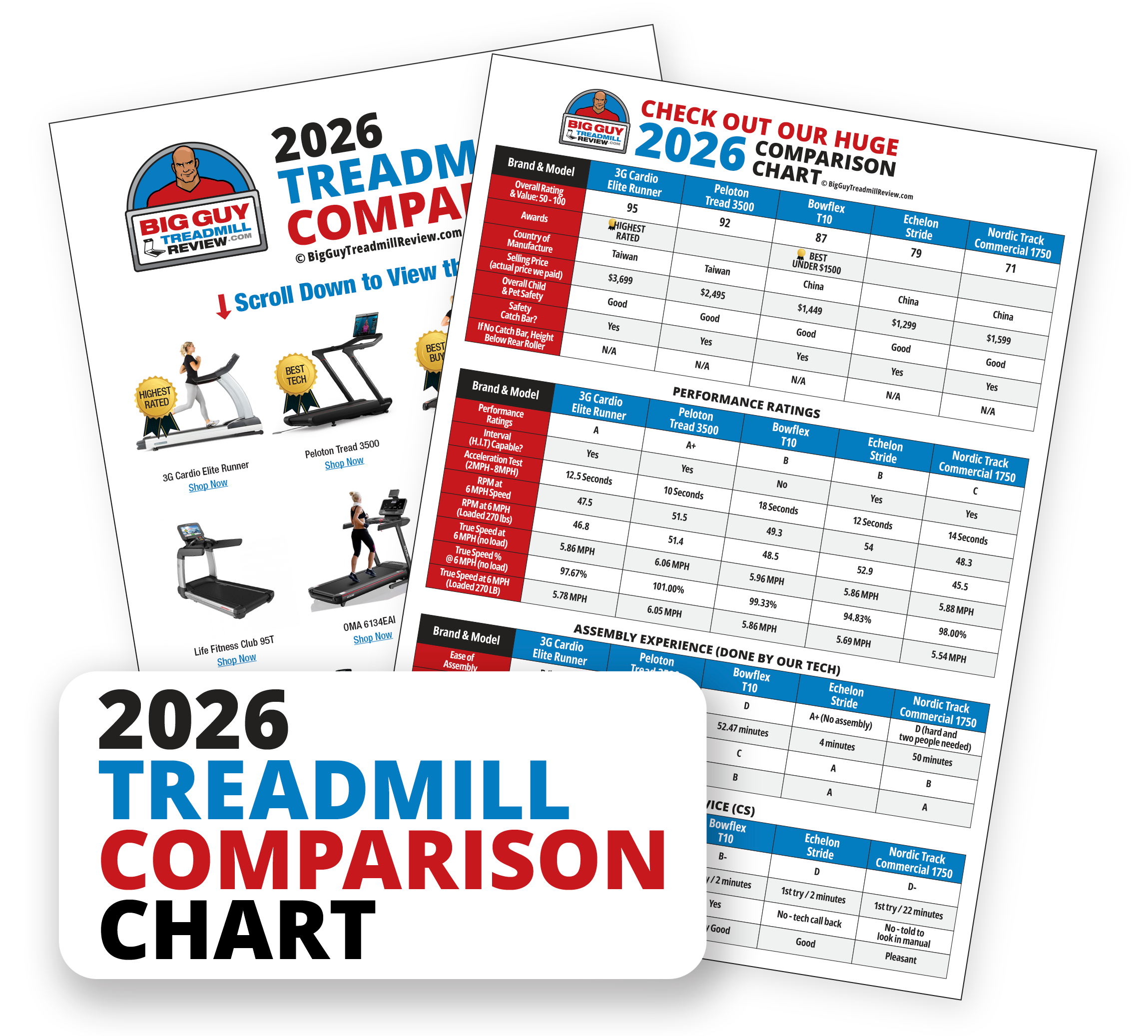
















Who Took Home the Gold?
Find out which 2026 Treadmills Reviewed got one of the Prestigious “Big Guy” Awards